


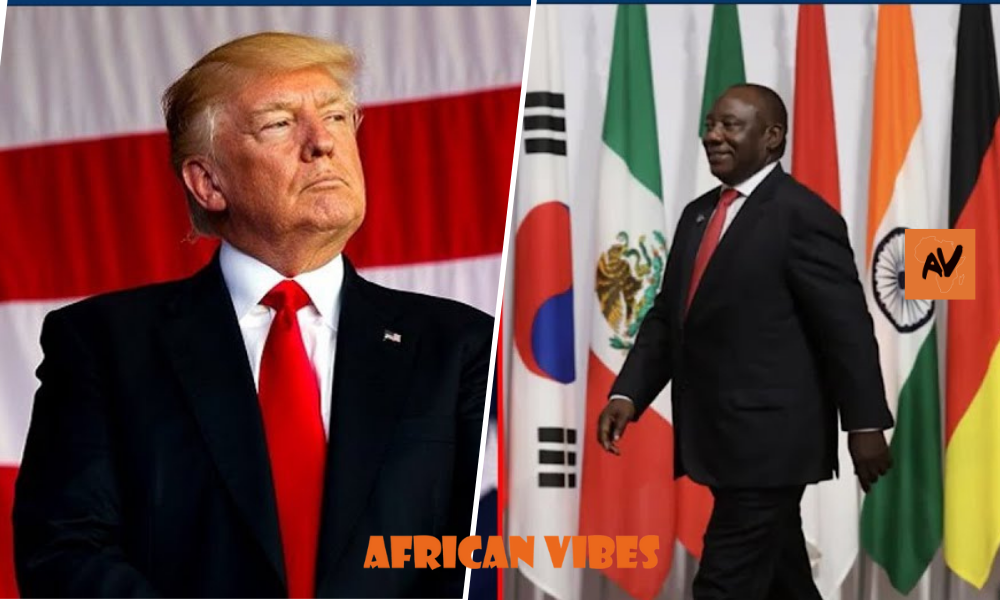
It was meant to be a ceremonial closing act, a diplomatic formality marking the end of South Africa’s presidency of the Group of 20. Instead, it became the spark that ignited one of the most dramatic geopolitical confrontations of the decade.
In a moment that stunned observers across global capitals, President Cyril Ramaphosa refused to hand over the G20 presidency gavel to the United States after Washington dispatched only a low-ranking chargé d’affaires to accept it. The U.S. had already boycotted the two-day summit. Sending a junior diplomat to receive one of the most symbolically important objects in multilateral politics was, in Pretoria’s view, a deliberate slight.
South Africa responded with an unmistakable message: Africa will no longer perform humility on the world stage.
The U.S., in an unusual diplomatic outburst, then accused Ramaphosa of “running his mouth”—a comment that infuriated African leaders and analysts, and deepened a rift already widened by Washington’s absence from the summit.
For many across the continent, this was more than a protocol dispute. It was a moment of political self-assertion, a rare instance where an African state publicly challenged one of the world’s most powerful nations—and did so with calm, unapologetic resolve.
ALSO READ: China Backs Nigeria Against US Military Threat — Ally or Calculated Interest?
The Protocol War: A Snub Met With a Counter-Snub
The controversy originated long before the gavel moment. President Donald Trump’s boycott of the G20 was rooted in widely debunked claims of “genocide” against white Afrikaner farmers—claims dismissed by South African officials, human rights groups, and international observers as misinformation and domestic political theatre.
But the true diplomatic rupture occurred when the U.S., after skipping the summit entirely, attempted to send an embassy placeholder to salvage the handover ceremony.
Foreign Minister Ronald Lamola rejected the proposal outright.
“It is the leaders’ summit,” Lamola said. “The right level is the head of state, a minister, or a special envoy.”
It was a pointed lesson in diplomatic protocol, delivered publicly to Washington.
To many African diplomats, the U.S. gesture exposed a persistent assumption: that international norms matter—unless an African country is involved. The refusal was therefore not an act of hostility, but a demand for equal treatment, a correction of the familiar hierarchy that has long defined Western engagement with the continent.

A Quiet Revolution: South Africa’s Early Adoption of the Leaders’ Declaration
The rejection of the gavel was dramatic, but the most strategic move South Africa made unfolded earlier—almost quietly—on day one.
In an unprecedented break from G20 tradition, Pretoria pushed for the Leaders’ Declaration to be adopted at the start of the summit rather than the end. The U.S., angered by the agenda’s heavy emphasis on African development and climate justice, reportedly urged South Africa not to issue a declaration at all.
Pretoria refused.
By adopting the declaration early, Ramaphosa’s government protected it from sabotage and ensured the summit concluded with a unified global position—one that prioritized:
- Debt relief and restructuring
- Fairer global financial governance
- Climate justice and localized mineral processing
South Africa effectively neutralized the power of Washington’s boycott.
As Ramaphosa’s spokesperson put it:
“We cannot be held back by one country.”
It was a tactical masterstroke—and a sign that Africa is no longer content to be a passive participant in global economic governance.
ALSO READ: Botswana and Angola’s Race to Own De Beers, the World’s Iconic Diamond Giant
Ubuntu Diplomacy: When Culture Becomes Strategy
Perhaps most compelling is the philosophical backbone of South Africa’s stance: Ubuntu, the ethic of shared humanity.
Pretoria’s refusal to hand over the gavel was not only about its own dignity. It was a defense of the African Union’s newly gained permanent seat at the G20 table. To concede to a diplomatic slight would have signaled that Africa’s presence remained negotiable, contingent on Western goodwill.
Instead, South Africa elevated Ubuntu to a geopolitical principle:
Respect is mutual or it is meaningless.
The message resonated across the continent. Whether in Abuja, Nairobi, Dakar, or Addis Ababa, many saw this moment as a symbolic end to the paternalistic patterns of Cold War diplomacy that treated African states as junior partners rather than equal actors.
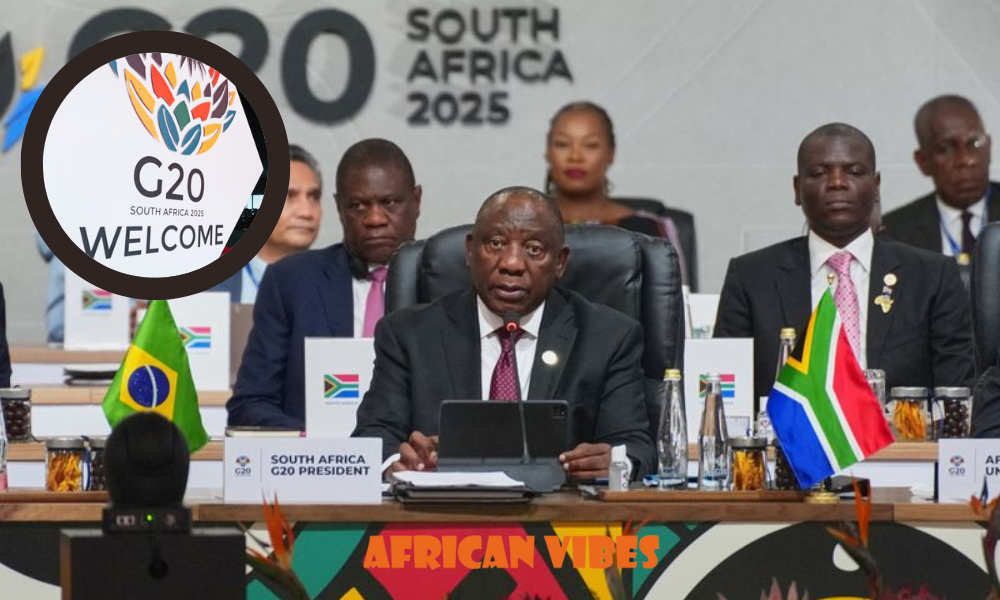
A New Line in the Sand: The Multipolar Era Arrives in Johannesburg
The Johannesburg summit will be remembered not for its speeches or photo ops, but for its recalibration of power. South Africa’s defiance was not impulsive; it was strategic, calculated, and deeply rooted in the contemporaneous shift toward a multipolar global order.
In this emerging landscape—defined by BRICS expansion, Global South coalitions, and Africa’s demographic and economic rise—Pretoria’s stance served as a warning shot:
Africa will no longer accept symbolic humiliations disguised as protocol oversights.
The United States offered no apology for the “running his mouth” remark. But it did quietly adjust its diplomatic posture in the days that followed—proof that the consequences had landed.
Conclusion: A Moment That Redefined International Respect
The G20 in Johannesburg ended not in polite consensus but in a powerful reconfiguration of international norms. South Africa did not simply refuse a gavel. It refused a worldview in which African states are expected to acquiesce to diminished recognition.