


Authentic Tunisian Masfouf
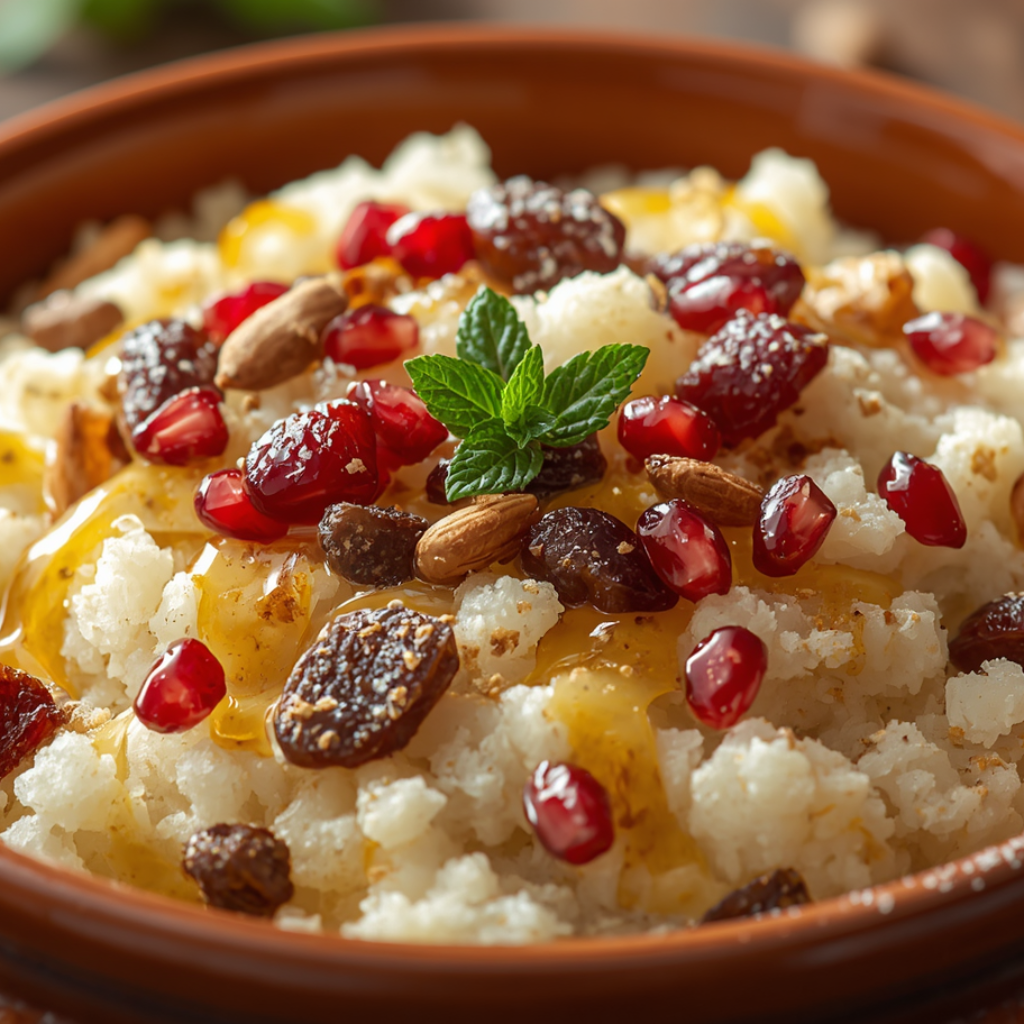
If you have never had Masfouf (pronounced mas-foof), think of it as the ultimate light, aromatic North African dessert or breakfast bowl. It is a legendary sweet version of couscous heavily favored during the holy month of Ramadan for Suhoor (the pre-dawn meal) because it provides long-lasting energy while remaining gentle on the stomach.
Equipment
- A Steamer Set
- A wide bowl
Ingredients
- 500 g extra fine couscous
- 150 g cold butter
- 5 tbsp sugar
- 100ml of warm water
- 2 tbsp olive oil
- 1 tbsp orange blossom water
- Nuts, dates, grapes or pomegranate
Instructions
Step 1: Lubricate the Grains (Crucial to Prevent Clumping)
- Pour the 500 g of extra fine couscous into your large, wide bowl.500 g extra fine couscous
- Drizzle the 2 tablespoons of olive oil evenly over the dry grains.2 tbsp olive oil
- Using your clean hands, gently rub and massage the couscous between your fingertips and palms. Make sure every single tiny grain is thinly coated in the olive oil. This acts as a barrier, ensuring the grains stay separate and fluff up instead of turning into paste when hit with steam.
Step 2: The First Steam
- Fill the bottom pot of your steamer half-full with water and bring it to a rolling boil.
- Transfer your oil-coated couscous into the upper steamer basket (ensuring your lining is in place if the holes are wide). Place the steamer basket over the boiling water. Do not cover with a lid.
- Let the couscous steam uncovered for exactly 15 minutes. You will see steam rising cleanly through the grains.
Step 3: Hydrate and Rest
- Carefully remove the steamer basket and tip the hot couscous back into your large, wide bowl.
- Slowly drizzle the 100 ml of warm water over the hot grains.100ml of warm water
- Using a large wooden spoon or fork (as it will be very hot), mix the water thoroughly into the couscous, breaking up any small lumps that formed during steaming.
- Spread the grains out in the bowl and let them rest for 5 minutes to fully drink up the water.
Step 4: The Second Steam
- Transfer the hydrated couscous back into the steamer basket.
- Return it to sit over the boiling water.
- Steam for an additional 20 to 30 minutes. Test the texture at the 20-minute mark: grab a small pinch of grains; they should feel entirely soft, light, and fully cooked through with no hard, gritty bite in the center.
Step 5: Incorporate the Aromatics
- Empty the hot, perfectly cooked couscous back into your wide bowl for the final time.
- While the grains are screaming hot, drop in the 150 g of cold diced butter. Stir continuously with a spoon. The heat of the couscous will melt the butter, turning the dish incredibly glossy, rich, and aromatic.150 g cold butter
- Sprinkle the 5 tablespoons of sugar and drizzle the 1 tablespoon of orange blossom water over the buttered grains. Toss well until the sugar completely dissolves into the warm mixture.1 tbsp orange blossom water, 5 tbsp sugar
How to Style and Serve It
- Masfouf is an incredibly visual dish, celebrated for its gorgeous, colorful presentation.
- Mound the warm, sweet couscous gracefully into a large, shallow serving bowl or separate it into individual dessert bowls.
- Flatten the top slightly.
- The Garnish Art: Arrange your chopped dates, fresh grapes, ruby-red pomegranate seeds, and toasted nuts over the top. You can arrange them in geometric, alternating radial stripes extending from the center out to the edge for a beautiful, festive Tunisian design.Nuts, dates, grapes or pomegranate
- Serving Tradition: Serve warm or at room temperature. It pairs exquisitely with a side glass of cold buttermilk (Laban) or fresh mint tea!
Nutrition
Calories: 450kcal
Tried this recipe?Please consider Leaving a Review!