


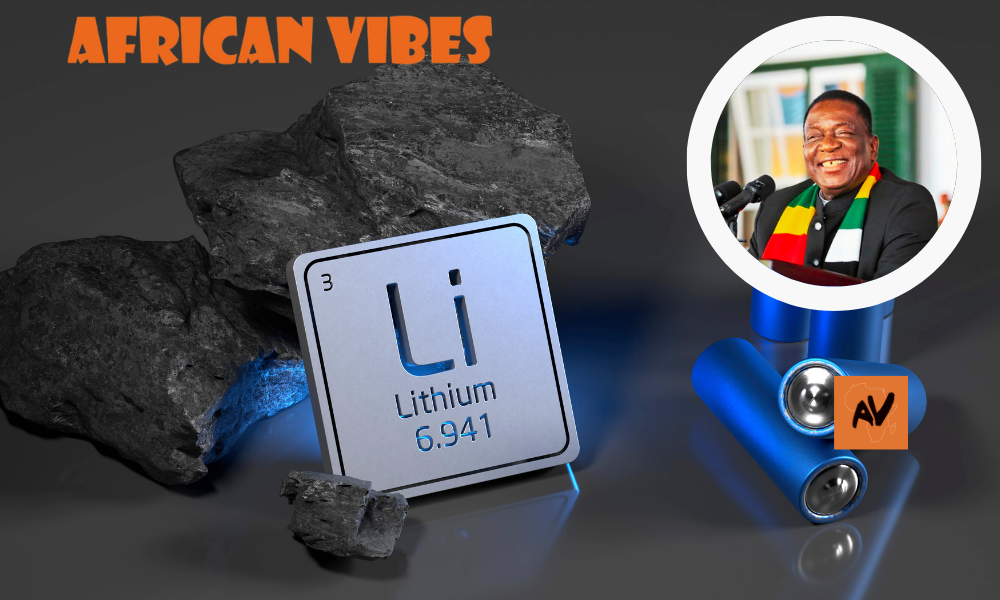
Zimbabwe’s mining sector is projected to create as many as 100,000 new jobs over the next five years, as investment accelerates across lithium, gold, platinum, and chrome projects that are increasingly vital to the global clean energy economy.
The anticipated employment surge reflects Zimbabwe’s growing importance in international mineral supply chains linked to electric vehicles, renewable energy storage, and advanced manufacturing. Industry analysts say the country is positioning itself as one of Africa’s most strategically important mining hubs at a time when global demand for critical minerals continues to rise.
Mining already contributes billions of dollars annually to Zimbabwe’s economy and remains one of the country’s largest sources of foreign currency earnings. The latest projections suggest the sector could become an even greater driver of economic growth, infrastructure development, and regional trade across Southern Africa.
Lithium Demand Drives New Investment
At the centre of Zimbabwe’s mining expansion is lithium, a critical mineral used in electric vehicle batteries and renewable energy storage systems.
As global automakers and battery manufacturers race to secure reliable lithium supplies, Zimbabwe’s large deposits have attracted growing international interest. Several mining companies are expanding exploration and production projects, with lithium expected to account for a significant share of the projected 100,000 jobs.
The lithium boom is also expected to stimulate wider economic activity beyond mining operations themselves, including transportation, equipment supply, construction, logistics, and energy infrastructure.
Analysts say Zimbabwe could emerge as one of Africa’s leading lithium exporters if current investment momentum continues.
ALSO READ: Three Nations Now Offering Fast Pathways for the Diaspora
Gold, Platinum and Chrome Remain Strategic Assets
While lithium has captured global attention, Zimbabwe’s traditional mining sectors remain central to its economic ambitions.
Gold production continues to attract renewed investment amid strong international prices, while platinum and chrome remain essential to automotive manufacturing, stainless steel production, and industrial technologies.
Zimbabwe possesses some of the world’s largest platinum reserves and is already among the leading producers globally. Demand for platinum group metals remains strong due to their use in catalytic converters, electronics, and hydrogen energy technologies.
Chrome exports also continue to support manufacturing industries worldwide, particularly in Asia and Europe.
Foreign Investment Accelerating
The projected expansion is being fuelled by increasing foreign direct investment into Zimbabwe’s mining sector.
Global companies are seeking to diversify mineral sourcing away from heavily concentrated markets, creating new opportunities for mineral-rich African countries. Zimbabwe’s established mining history, relatively competitive labour costs, and expanding infrastructure are helping attract investors.
The global clean energy transition is another major factor driving investment. Demand for minerals linked to electric vehicles and renewable energy systems is expected to remain high for decades, creating what analysts describe as a long-term structural shift rather than a temporary commodity boom.
Job Opportunities Across Multiple Sectors
The expected 100,000 jobs will span a wide range of skill levels and professions.
New positions are likely to include:
- Mining engineers and geologists
- Heavy equipment operators
- Welders and electricians
- Environmental specialists
- Logistics coordinators
- Safety and compliance officers
- Administrative and finance staff
Industry experts say the growth could provide opportunities for both highly trained professionals and entry-level workers, particularly in rural communities located near mining operations.
ALSO READ: Senegal Launches First Satellite: A Milestone in African Space Exploration
Skills Development Becoming a Priority
Zimbabwe’s government and private sector are increasingly focusing on workforce development to ensure local communities benefit from the mining expansion.
Vocational training programmes and technical education initiatives are being expanded to prepare workers for mining-related employment. Industry partnerships with colleges and training institutions are also expected to grow as demand for skilled labour increases.
Supporters argue that investing in local skills development will be essential if Zimbabwe hopes to maximise the economic benefits of its mineral resources.
Challenges Remain
Despite the optimistic outlook, analysts caution that several challenges could affect the pace of growth.
Energy shortages, transport infrastructure limitations, and regulatory uncertainty remain concerns for some investors. Environmental management and community relations will also play a critical role as mining projects expand.
There are also calls for stronger local content policies to ensure Zimbabwean businesses and workers receive a larger share of the sector’s economic benefits.
Maintaining investor confidence while balancing environmental protection and social responsibility is likely to remain one of the country’s biggest policy challenges.
A Defining Economic Opportunity
The projected growth in Zimbabwe’s mining industry represents one of the country’s most significant economic opportunities in recent years.
With global demand for critical minerals expected to rise sharply during the clean energy transition, Zimbabwe is increasingly being viewed as a strategic supplier to international markets.
If managed effectively, the mining boom could strengthen foreign currency reserves, expand exports, improve infrastructure, and create long-term employment opportunities across the country.
For Zimbabwe, the next five years may prove decisive in determining whether its vast mineral wealth can translate into broader economic transformation and sustainable development.