


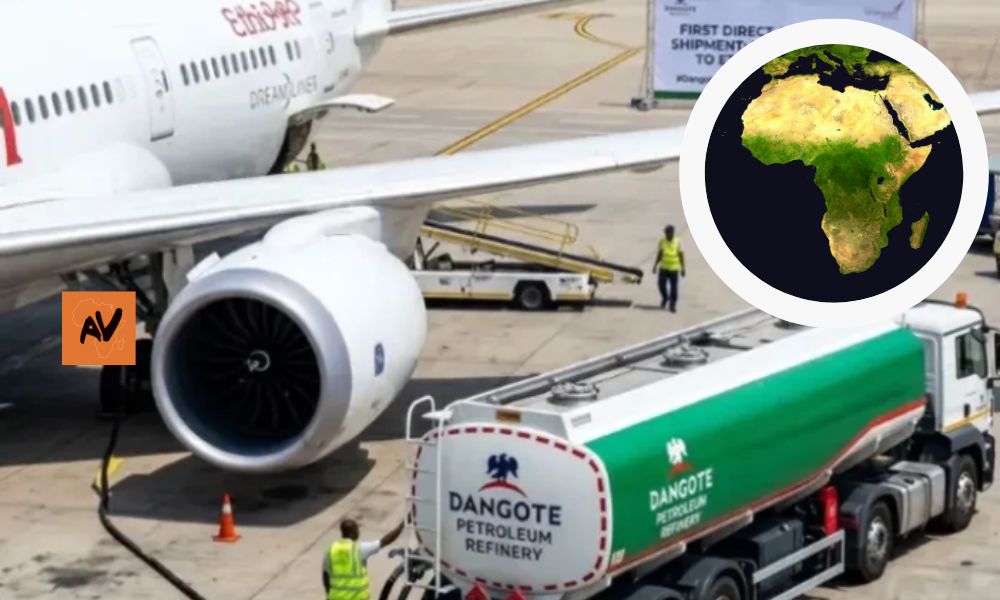
Africa’s aviation fuel market has been through a turbulent stretch. Middle East supply disruptions pushed jet fuel prices sharply higher through early 2026, exposing just how few large-scale producers exist on the continent and how much airlines depend on a handful of refiners, national oil companies, and into-plane fuel networks. Here’s a rundown of the ten most important players currently supplying Jet A-1 across Africa — from continental refining giants to the specialist companies that physically pump fuel into aircraft at the tarmac.
1. Dangote Petroleum Refinery (Nigeria)
Aliko Dangote’s Lagos refinery has become the standout story in African aviation fuel. Running at its full 650,000 barrel-per-day capacity, the plant produces roughly 24 million litres of jet fuel daily. In April 2026, it briefly became the world’s single largest exporter of aviation fuel, capitalizing on Gulf supply disruptions tied to the Middle East conflict. The refinery’s flexible blending system can process dozens of different crude grades, and its CEO has described the operation as shifting into a “max jet mode” during the crisis. While a large share of output is exported to Europe, the plant also supplies Nigerian domestic carriers, whose fuel needs the aviation industry estimates at around 2.1 million litres per day.
2. NNPC – Nigerian National Petroleum Company Limited
NNPC remains the backbone of Nigeria’s fuel supply chain and jet fuel import/distribution network. NNPC’s joint-venture crude output is heavily tied to oil-backed loans and pre-export financing deals, meaning much of the roughly 1.5 million barrels per day the company handles goes toward servicing debt to international traders and banks rather than fueling domestic supply directly. NNPC-aligned distribution nonetheless underpins fuel logistics at major West African hub airports like Lagos’s Murtala Muhammed International.
ALSO READ: Dangote and Peugeot Are Building Cars in Nigeria
3. Sasol (Natref Refinery) – South Africa
Sasol’s Natref refinery in Sasolburg is one of only two facilities on the entire continent capable of producing jet fuel at meaningful commercial scale. It remains the primary supplier of jet fuel to Johannesburg’s O.R. Tambo International Airport, South Africa’s busiest hub, and continued pumping fuel through the 2026 supply crunch even as stock levels tightened across the region.
4. Glencore’s Astron Energy – South Africa
Astron Energy operates the continent’s other large-scale jet-fuel-capable refinery and has re-established fuel supply at O.R. Tambo and King Shaka International (Durban) after a period of absence, alongside a long-standing presence at Cape Town International. The company supplies Jet A-1 to commercial airlines, general aviation, flying schools, and defence force customers, backed by a flexible ordering platform and multiple delivery modes to keep supply moving to airports.
5. TotalEnergies Marketing South Africa
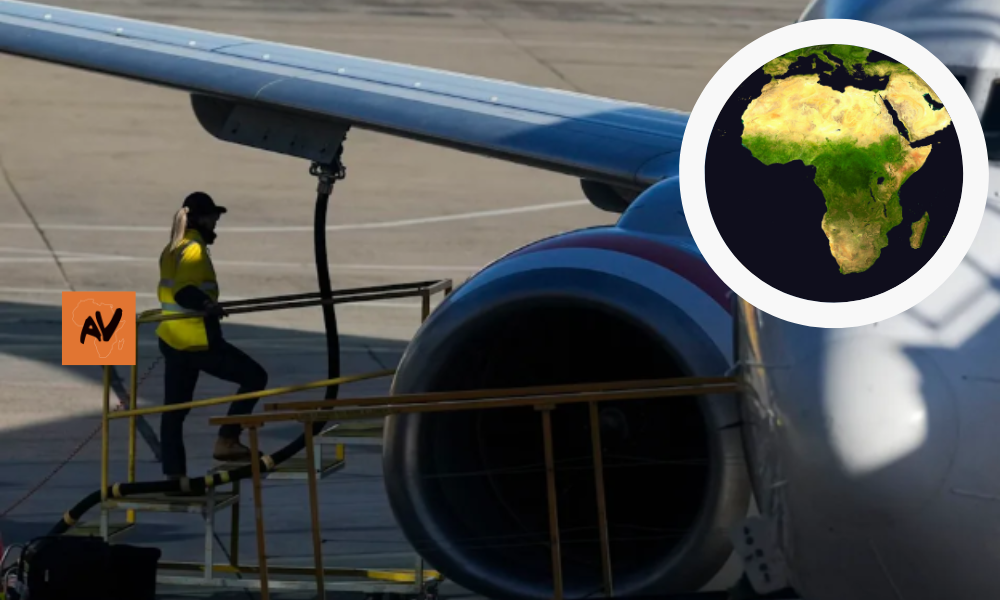
TotalEnergies is a major into-plane supplier at South Africa’s two busiest gateways, fueling roughly one in four planes departing O.R. Tambo and one in three departing Cape Town International. Its aviation customer roster includes South African Airways, Delta, Air France, KLM, Lufthansa, Qantas, and Comair, and the company has a track record of handling high-profile fueling assignments, including government and VIP aircraft.
6. Egyptian General Petroleum Corporation (EGPC) – Egypt
EGPC is Egypt’s state hydrocarbons company and runs a dedicated public division for supplying fuel to ships and aircraft, making it the central node for jet fuel distribution at Cairo and other major Egyptian airports. Egypt is also poised to host Africa’s first sustainable aviation fuel plant, a joint project reported for 2027, positioning EGPC-linked infrastructure at the center of the continent’s SAF ambitions as well as conventional Jet A-1 supply.
7. Sonatrach – Algeria
Algeria’s state energy company Sonatrach is one of the largest integrated oil and gas producers in Africa and the Middle East region, with refining and distribution operations that feed Algeria’s domestic aviation fuel needs. Sonatrach’s direct pipeline links to Italy and Spain give it a structural advantage over tanker-dependent rivals in broader fuel logistics, reinforcing its role as North Africa’s dominant energy supplier.
ALSO READ: Aliko Dangote Unveils Mega Refinery Project to End East Africa’s Fuel Imports
8. World Fuel Services / MH Aviation Services – Pan-African Network
Through its South African subsidiary MH Aviation Services, World Fuel Services operates one of the largest aviation fuel supply networks in the world, serving business aviation, commercial airlines, and military fleets. The company acts as a national bulk-fuel provider across multiple African markets, supplementing its own infrastructure with partner arrangements at airports where it doesn’t have a direct presence.
9. Avion Energy – Kenya
Avion Energy is a privately owned Kenyan supplier with more than a decade of experience fueling aircraft at Jomo Kenyatta International and Wilson Airport, delivering Jet A-1 and Avgas in volumes ranging from 5,000 to 35,000 litres per delivery. The company also serves defence and military aviation clients and general/business aviation operators, making it one of East Africa’s more established independent fuel suppliers.
10. SUAT Fuels – Pan-African Into-Plane Network
SUAT Fuels supplies Jet A-1 at more than 100 African airports, offering round-the-clock into-plane delivery, AOG (aircraft-on-ground) emergency response, and SAF blends at select locations. The company highlights how uneven Africa’s fuel-pricing landscape is: major hubs like Johannesburg, Cairo, and Cape Town see competitive differentials of 10–20 cents per litre above benchmark, while remote West and Central African stations can carry premiums of 30–60 cents per litre due to logistics costs.
The Bigger Picture
Africa’s jet fuel market is unusually concentrated. The continent has only two fully operational large-scale refineries capable of producing jet fuel commercially — Sasol’s Natref and Glencore’s Astron Energy, both in South Africa — which is why Dangote’s rapid rise in Nigeria has been such a significant development for regional supply security. Everywhere else, airlines lean heavily on imports, national oil companies, and specialist into-plane suppliers like SUAT Fuels, Avion Energy, and World Fuel Services to keep aircraft moving.
Prices and supply conditions referenced here reflect the volatile market conditions of early-to-mid 2026; airlines and buyers should confirm current rates and availability directly with suppliers.