


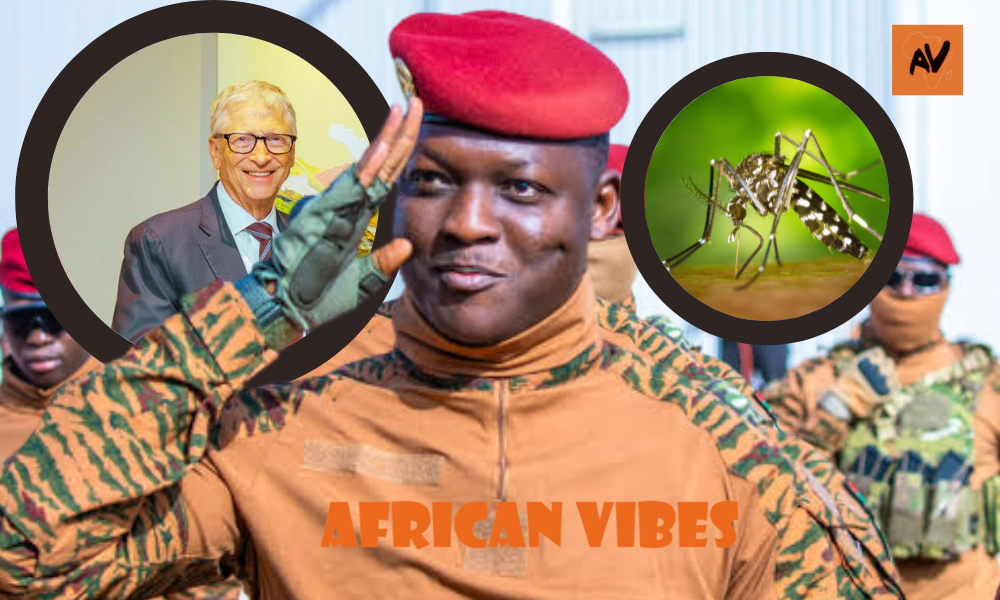
In August 2025, authorities in Burkina Faso shut down Target Malaria, a research programme that had spent more than a decade developing genetically modified mosquitoes to combat one of Africa’s deadliest diseases. Days after government inspectors raided the project’s laboratory in Bobo-Dioulasso, officials suspended all operations and ordered the destruction of every remaining genetically modified mosquito.
Nearly a year later, the decision continues to resonate well beyond Burkina Faso’s borders, raising questions about how African governments balance public health, scientific innovation and national sovereignty.
The project, backed primarily by the Bill & Melinda Gates Foundation and led by scientists from Imperial College London alongside Burkina Faso’s Research Institute in Health Sciences (IRSS), had become one of the world’s most closely watched experiments in the fight against malaria.
Instead, it became one of the continent’s most controversial scientific projects.
What was Target Malaria?
Launched in 2005, Target Malaria aimed to reduce malaria transmission by genetically modifying male Anopheles gambiae mosquitoes—the species responsible for spreading the disease across much of sub-Saharan Africa.
Unlike female mosquitoes, males do not bite humans.
Researchers hoped the modified insects would mate with wild females and gradually reduce mosquito populations by passing on genes that limited female fertility or produced predominantly male offspring.
The project followed a cautious, phased approach.
In 2019, Burkina Faso became the first African country to conduct an open-field release of genetically modified mosquitoes. These initial releases were designed to be self-limiting, meaning the modified genes disappeared naturally after several generations.
A second controlled release took place on 11 August 2025.
Just one week later, the government intervened.
ALSO READ: Burkina Faso Bans Exploitative NGO Photos of Aid Recipients in New Humanitarian Rules
Why did Burkina Faso stop the programme?
Officials cited three main reasons.
They argued that genetically modified organisms posed uncertain environmental risks, questioned whether the programme had delivered results after 13 years of research, and said Burkina Faso should determine its own scientific priorities rather than rely on foreign-funded initiatives.
The decision also reflected a wider political shift.
Since Captain Ibrahim Traoré seized power in 2022, Burkina Faso’s military government has pursued policies emphasising national sovereignty while reducing Western influence. Relations with France have deteriorated, several international organisations have lost operating licences, and foreign-backed programmes have faced increasing scrutiny.
Within that political climate, Target Malaria became a symbol of a broader debate over foreign involvement in African science.
Critics versus researchers
Civil society organisations had opposed the project for years.
The Coalition for Monitoring Biotechnological Activities in Burkina Faso (CVAB) argued that gene-editing technologies carried ethical and ecological uncertainties that had not been fully addressed. Critics called for greater investment in conventional malaria control measures instead of experimental genetic technologies.
Target Malaria rejected those claims.
Researchers said every stage of the programme complied with Burkina Faso’s regulatory framework and received approval from national biosafety, environmental and ethics authorities. They also said communities involved in field trials had been consulted before any mosquito releases took place.
Despite those assurances, the programme could not withstand growing political pressure.
A dramatic shutdown
The closure unfolded rapidly.
On 18 August 2025, judicial police searched Target Malaria’s insectary in Bobo-Dioulasso, sealing laboratories and examining vehicles leaving the site.
Four days later, the government officially suspended all activities.
Authorities ordered the destruction of all genetically modified mosquito samples, while mosquitoes already released into the environment were neutralised using insecticide.
The decision effectively ended more than a decade of scientific work in Burkina Faso.
What does this mean for Ghana and Uganda?
Burkina Faso is not the only African country participating in Target Malaria.
Research programmes continue in Ghana and Uganda, although scientists say the Burkina Faso decision has already affected planning and collaboration.
Researchers at North Carolina State University’s Genetic Engineering and Society Center described the shutdown as a “cautionary tale,” warning it could encourage governments to subject similar projects to greater political scrutiny.
In Uganda, scientists told Nature Africa that losing access to Burkina Faso’s research infrastructure and field data could delay future studies and increase costs.
So far, however, neither Ghana nor Uganda has suspended the programme.
Why the debate matters
Malaria remains one of the world’s deadliest infectious diseases.
According to the World Health Organization, the disease kills nearly 600,000 people every year, with most deaths occurring among children under five in sub-Saharan Africa.
Traditional interventions—including insecticide-treated bed nets, indoor spraying, vaccines and antimalarial medicines—have saved millions of lives. But progress has slowed in recent years, prompting scientists to explore new approaches such as gene-editing technology.
Supporters argue genetically modified mosquitoes could become an important addition to existing malaria control measures.
Critics counter that releasing genetically engineered organisms into the wild could have irreversible ecological consequences that science does not yet fully understand.
The debate remains unresolved.
The bigger picture
Burkina Faso’s decision was about more than mosquitoes.
It reflected a growing debate across Africa over foreign-funded research, technological innovation and who should determine the continent’s scientific priorities.
For supporters of the project, the closure represents a setback for malaria research and years of scientific investment.
For critics, it marks an assertion of national control over public health policy.
Whether Burkina Faso’s decision remains an isolated case—or signals a broader shift in how African governments approach foreign-backed scientific programmes—will become clearer as countries such as Ghana and Uganda decide how to proceed.