


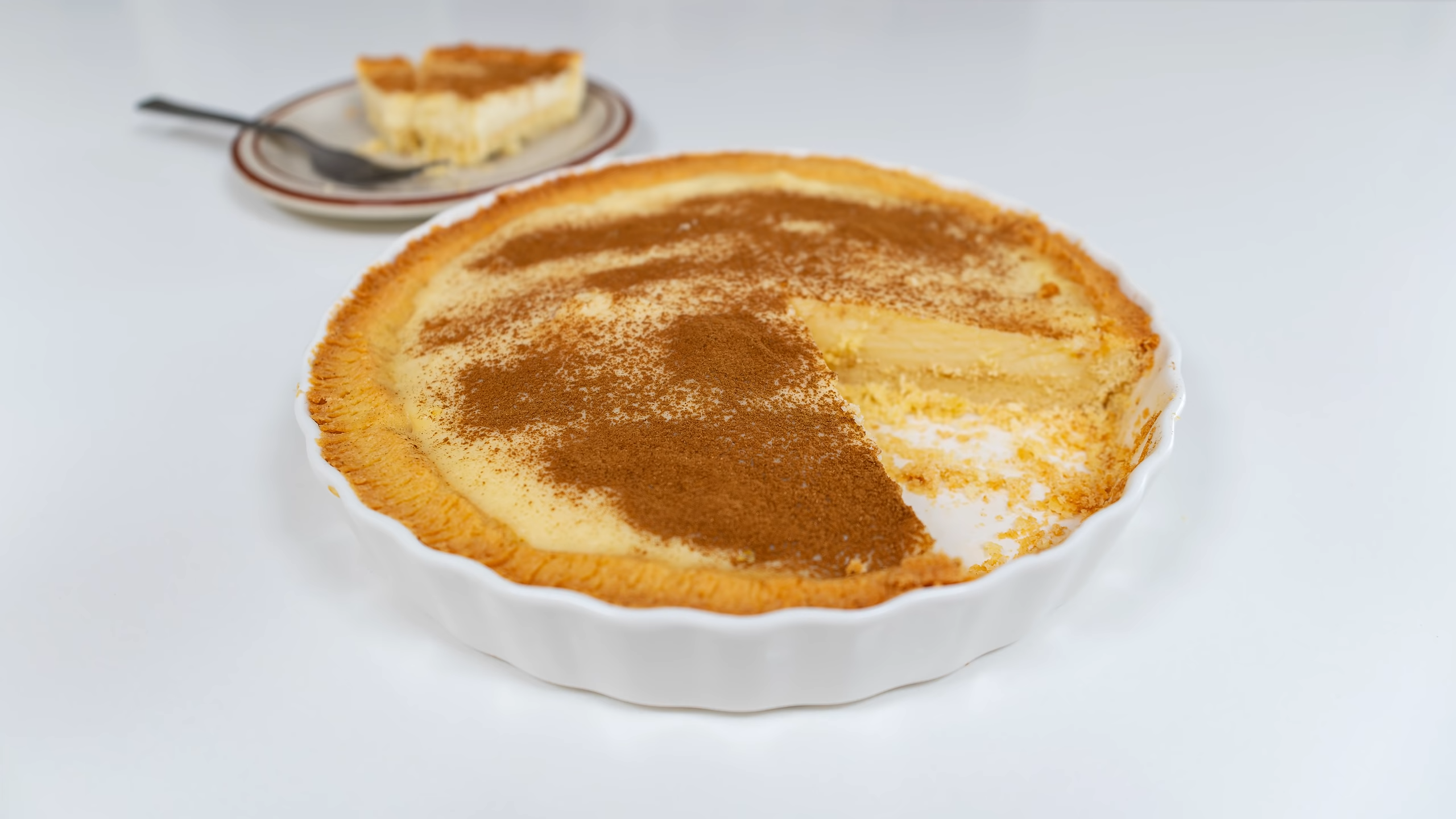
A slice of Melktert (Milk Tart) is an embrace—a creamy, fragrant taste of home for millions across South Africa. This is not merely a custard pie; it is a cultural artifact, a comforting classic whose history is as rich and complex as the flavour it holds.
Origins and Cultural Crossroads
Our culinary journey with Melktert begins in the 17th century at the Cape of Good Hope. As Dutch settlers adapted their Mattentaart to the abundance of fresh, rich dairy found at the Cape, a new, lighter dessert was born. This is a testament to the country’s culinary fusion, blending European technique with local ingredients. What truly distinguishes Melktert is the distinctly higher ratio of milk to eggs, resulting in a custard that is beautifully light, silken, and profoundly milky. The crowning touch, a generous dusting of cinnamon, is a fragrant echo of the region’s historical role in the global spice trade, a whisper of Indonesian and Eastern influences that helped shape the Cape’s vibrant cuisine.
Sensory Experience and Recipe Authenticity
This recipe, featuring a crisp, buttery sweet shortcrust pastry (kors) and a velvety smooth, stovetop-cooked custard, captures the authentic essence of this national treasure. The aroma that fills your kitchen as the custard simmers is pure comfort—warm milk, sweet vanilla, and aromatic cinnamon. The final result is a study in complementary textures: the satisfying, crisp crumb of the pastry yields instantly to the cloud-like, wobbly filling that melts on the tongue, leaving behind the sweet, warm flavour of dairy and spice.
Serving Traditions
Melktert is the quintessential South African celebratory sweet. It graces tables at all major holidays like Easter and Mother’s Day, family Sunday lunches, and is the star of any afternoon tea (tee en koek). It’s traditionally served chilled or at cool room temperature. To share a slice of Melktert is to share heritage, memory, and a deep-seated culinary tradition. This version is designed to be fool-proof and authentic, allowing you to bring this cherished slice of South African history right to your own table.
How to Make South African Milk Tart
ALSO READ:13 Popular African Foods You Cannot Miss In Each Region


Wrap Up
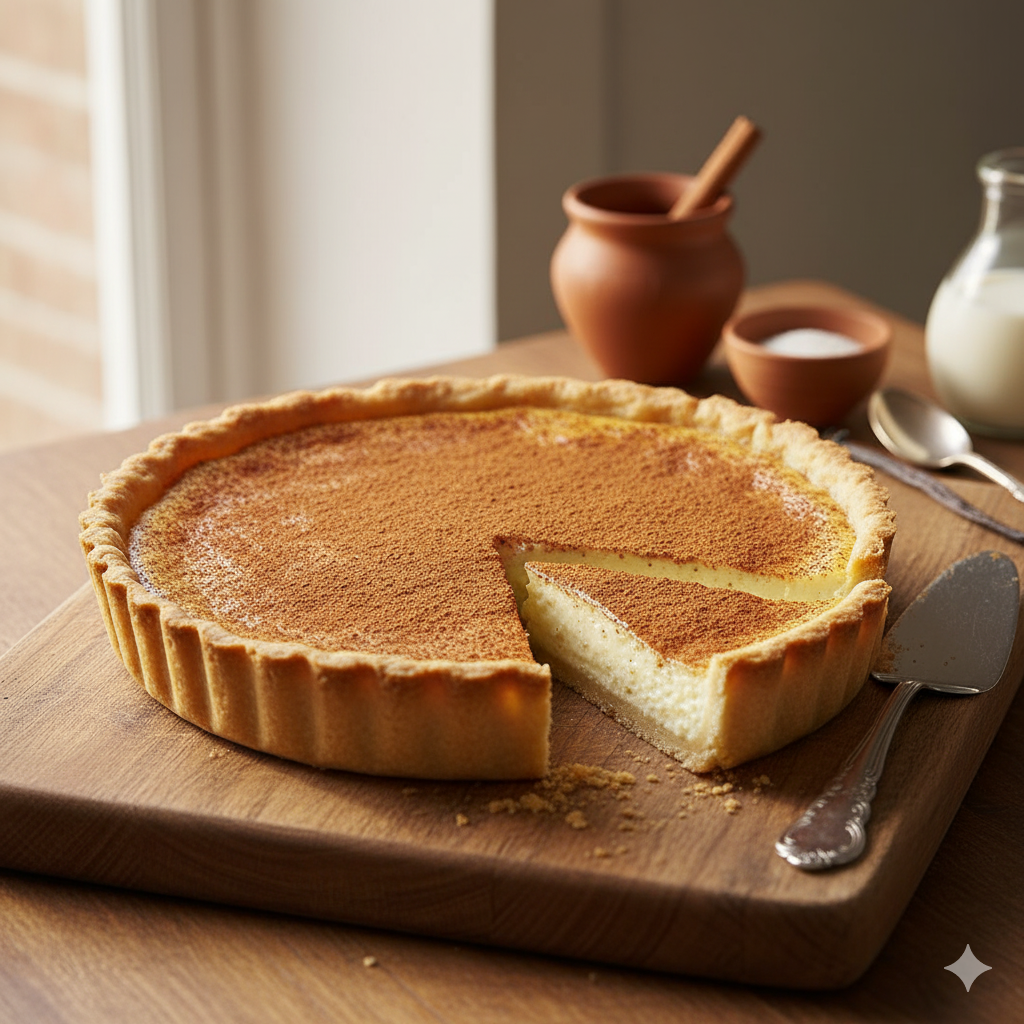
Whether you’re a seasoned baker or trying something new, this African Milk Tart recipe is a delightful way to bring a piece of South Africa into your kitchen. Happy baking and even happier eating!
Milk Tart Frequently Asked Questions
Q: Can I make this Melktert ahead of time?
Absolutely, and it’s highly recommended! Melktert is at its best when fully chilled, as the flavours deepen and the custard sets into its signature silky texture. Plan to make it the day before you intend to serve it, allowing 6-8 hours or, ideally, overnight in the refrigerator to set completely.
Q: Why did my custard filling not thicken properly?
The most common reasons are: 1) Not cooking the custard long enough once all the ingredients are combined. It needs to be whisked continuously over medium-low heat until it thickens considerably and begins to bubble. 2) Incorrect measurements of the starch components (flour and cornstarch). For a stable set, the measurements must be precise.
Q: What should I serve with this?
Traditionally, Melktert is served simply, dusted with a layer of ground cinnamon. Its subtle flavour is best appreciated on its own. However, a dollop of fresh whipped cream or a small scoop of good quality vanilla bean ice cream makes for a lovely accompaniment. It is also a classic teatime treat served with a cup of strong black coffee or Rooibos tea.
Q: Can I use a pre-made crust?
While a homemade shortcrust pastry is traditional and yields the best texture, you can use a pre-made sweet shortcrust or store-bought puff pastry shell to save time. Just ensure you blind-bake it according to package directions and let it cool before adding the filling.
Q: What is the difference between Melktert and a traditional American Custard Pie?
Melktert is distinctively lighter and creamier. The key difference lies in the ratio of milk to eggs, which is higher in Melktert, giving it a melt-in-your-mouth lightness and a stronger, purer milk flavour. American custard pies often rely more heavily on eggs or cream, resulting in a firmer, denser, and sometimes sweeter filling.
Q: Why did the top of my filling develop a skin while cooling?
Custards naturally develop a skin as they cool. To prevent this, you can cover the surface of the hot custard with plastic wrap, pressing it directly onto the filling to exclude air. Alternatively, you can give it a gentle whisk halfway through the initial room-temperature cooling phase. This skin won’t affect the flavour but can sometimes interfere with a smooth final appearance.
