


Banana Wine Recipes
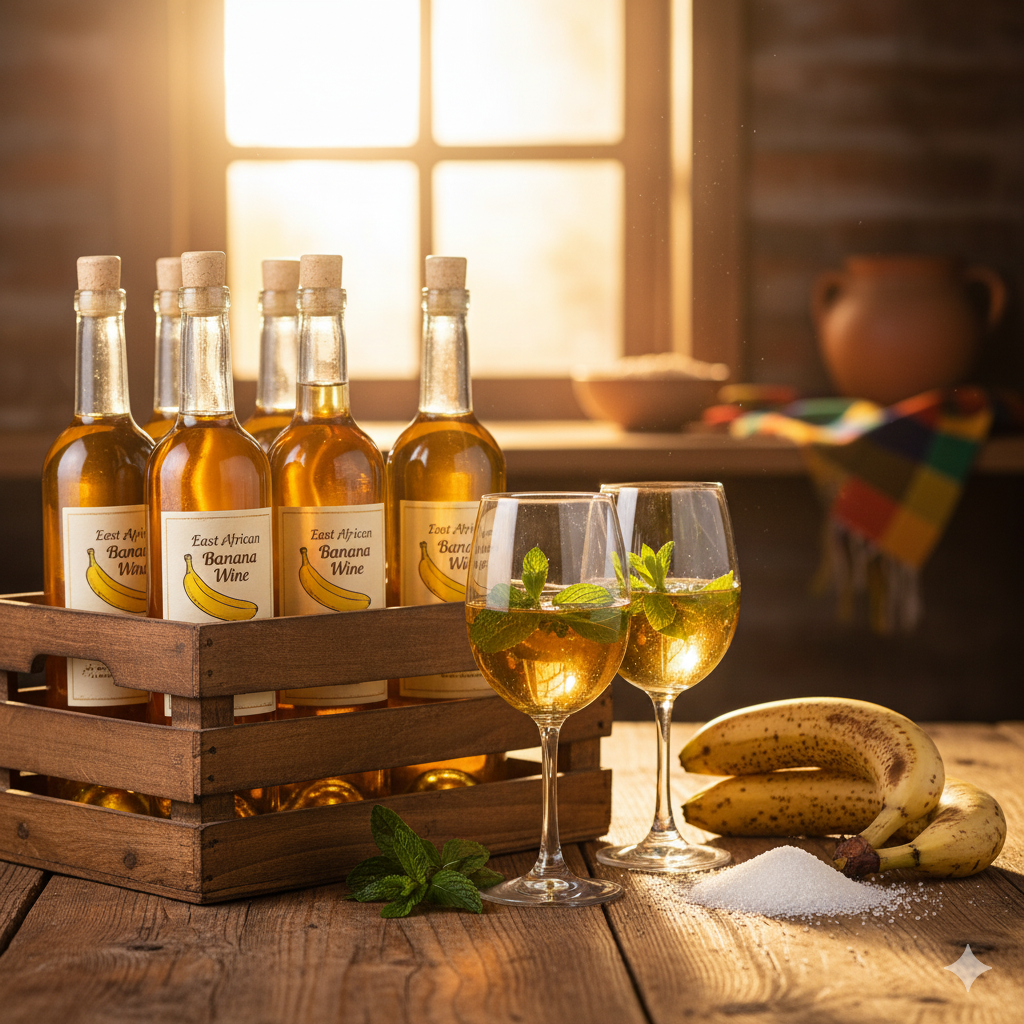
Banana wine is a sweet-smelling homemade beverage with a light fruit flavor, honey color, and a unique taste. The main ingredients needed are ripe bananas. It can be made sweet or dry depending upon the recipe being used and you can blend it with other wines for more body and flavor.Bananas are packed with sugars and are some of the sweetest fruits on earth. It is this sweetness which makes them perfect for wine-making. With only a few additions to give the acidity a better balance, you will have a full-bodied, very memorable wine. Banana pairs perfectly with lots of other fruits and spices making the possibilities endless when you have a good banana wine recipe.
Equipment
- Large cooking pot 5-gallon / 19-liter capacity
- Fermentation bucket or carboy 5-gallon / 19-liter capacity
- Hydrometer for measuring sugar and alcohol content
Ingredients
- 10 Ibs Ripe Bananas
- 6 Ibs Granulated Sugar
- 4 gallons Water
- 1 packet Wine Yeast
- 1 tsp Yeast Nutrient
- 1 tsp Pectic Enzyme
- 2 tbsp Lemon Juice
- 2 tablets Campden Tablets
Instructions
Sanitize Equipment
- Sanitize Equipment: Thoroughly clean and sanitize all your brewing equipment (fermentation bucket, pot, stirring spoon, airlock, etc.) according to the sanitizing solution's instructions. This is crucial to prevent contamination.
Prepare Bananas:
- Peel the 10 lbs (4.5 kg) of ripe bananas. Place them in a large cooking pot. You can mash them slightly with your hands or a potato masher to help release the pulp.10 Ibs Ripe Bananas
Boil Bananas:
- Add 4 gallons (15 liters) of water to the pot with the bananas. Bring the mixture to a boil over medium-high heat, then reduce heat and simmer for about 20-30 minutes, stirring occasionally. The bananas should become very soft.4 gallons Water
Strain the Pulp:
- Remove the pot from heat. Using a muslin cloth or cheesecloth lined over a large bowl or directly into your sanitized fermentation bucket, strain the banana mixture, pressing out as much liquid as possible from the cooked banana pulp. Discard the solids.
Add Sugar and Other Ingredients:
- Return the strained banana liquid (known as "must") to the clean cooking pot (or ensure your fermentation bucket is heat-resistant if adding directly). Stir in the 6 lbs (2.7 kg) of granulated sugar until completely dissolved. Add 2 tbsp (30 ml) of lemon juice, 1 tsp of pectic enzyme (if using), and 1 tsp of yeast nutrient (if using).6 Ibs Granulated Sugar, 1 tsp Pectic Enzyme, 2 tbsp Lemon Juice, 1 tsp Yeast Nutrient
Cool the Must:
- Allow the banana must to cool down to room temperature (around 65-75°F / 18-24°C). This is very important, as hot liquid will kill the yeast. You can place the pot in an ice bath to speed up cooling.
Add Campden Tablets (Optional):
- If using, crush and dissolve 2 Campden tablets in a small amount of water, then stir into the cooled must. Wait 24 hours before adding yeast if you use Campden tablets, as they can inhibit yeast activity.2 tablets Campden Tablets
Pitch the Yeast:
- Once the must is at the correct temperature (and 24 hours have passed if using Campden tablets), rehydrate the 1 packet (5g / 0.18 oz) of wine yeast according to package instructions (usually in a small amount of warm water for 15-20 minutes). Then, gently stir the activated yeast into the banana must.1 packet Wine Yeast
Primary Fermentation:
- Transfer the inoculated must into your sanitized fermentation bucket or carboy. Secure the lid with an airlock and stopper. Fill the airlock with sanitized water.
- Ferment: Place the fermentation vessel in a cool, dark place with a consistent temperature (ideally 65-75°F / 18-24°C). Fermentation will typically start within 24-48 hours, indicated by bubbling in the airlock.
- Rack the Wine (Secondary Fermentation): After about 1-2 weeks, when the bubbling in the airlock has significantly slowed or stopped, it's time to "rack" the wine. Carefully siphon the wine from the primary fermentation vessel into a clean, sanitized secondary fermentation vessel (another carboy or bucket), leaving behind the sediment (lees) at the bottom. Attach an airlock again.
- Age and Clarify: Allow the wine to continue fermenting and clarifying for another 2-3 weeks, or even longer (1-2 months for better flavor development). The longer it ages, the clearer and more refined the taste often becomes.
- Bottle: Once fermentation is complete (no more airlock activity for several days, and a hydrometer reading indicates stable specific gravity if you're using one), carefully siphon the clear wine into clean, sanitized wine bottles. Leave about 1 inch (2.5 cm) of headspace.
- Cork/Cap and Condition: Seal the bottles with corks or caps. Store the bottled wine in a cool, dark place. The wine will benefit from conditioning for at least 1-3 months before drinking to allow the flavors to mature.
Notes
- Sanitation is Key: The most important rule for successful winemaking is meticulous sanitation. Any contamination can ruin your batch.
- Banana Choice: Overripe bananas (with brown spots) are ideal as they contain more fermentable sugars and a stronger banana flavor.
- Sweetness Adjustment: If you prefer a sweeter wine, you can "back-sweeten" it before bottling by adding a non-fermentable sugar (like xylitol) or by stabilizing the wine (with Campden tablets and potassium sorbate) and then adding more sugar.
- Patience: Winemaking requires patience. Don't rush the fermentation or aging process; it will result in a much better-tasting final product.
Nutrition
Calories: 350kcal
Tried this recipe?Please consider Leaving a Review!